

Successfully copied to clipboard!
Armyworm
Join the munching adventure of nature's green warriors!
Let’s Explore
Overview
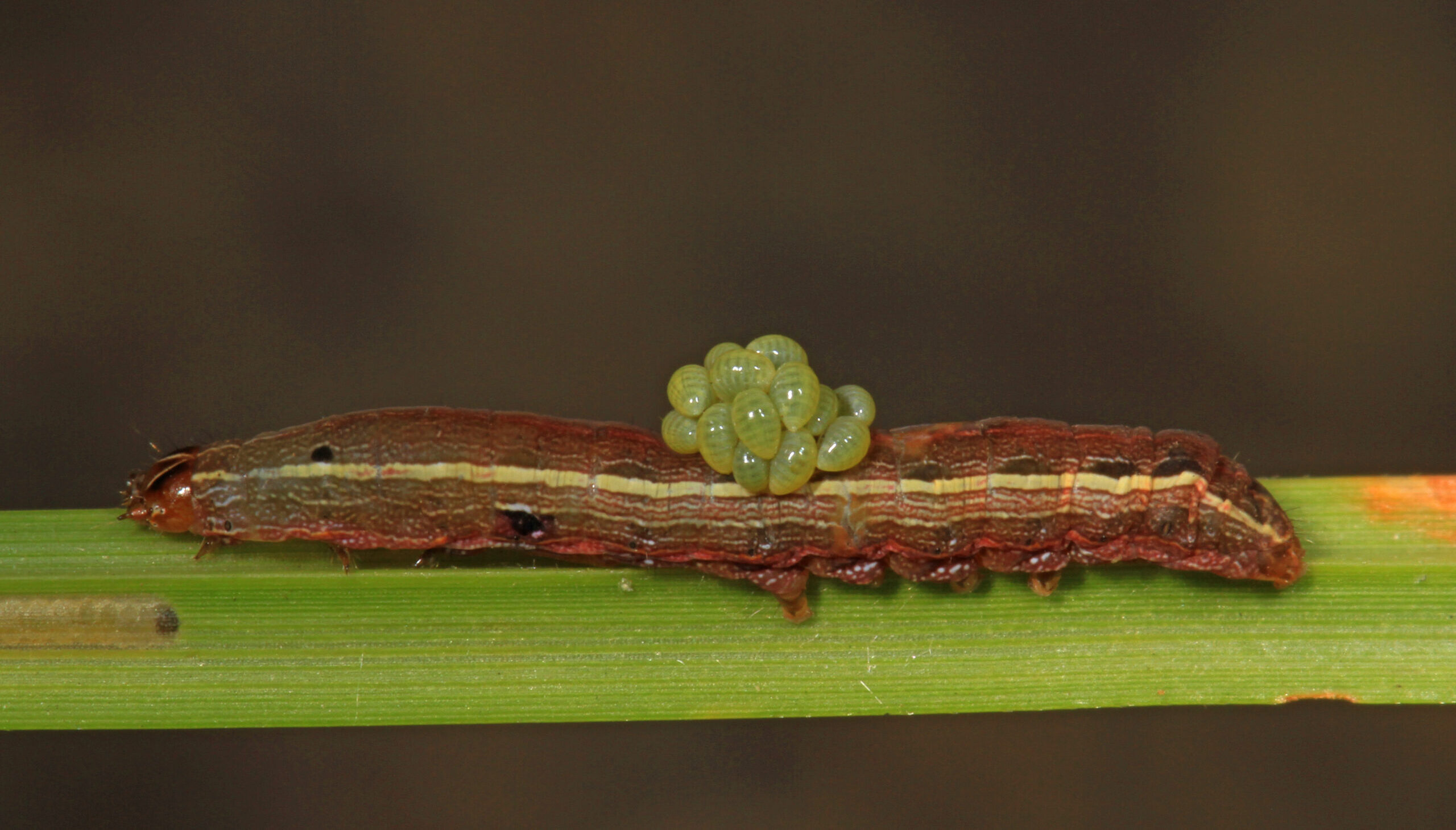
The Armyworm is an impressive insect known scientifically as Mythimna unipuncta. These fascinating creatures belong to the class Insecta and the order Lepidoptera, the same order that includes butterflies and moths.
Armyworms tend to measure about 3.8 centimeters (1.5 inches) long. They have a typically green or brown body with stripes and can sometimes look like little camouflage soldiers sneaking through the grass.
These insects are hungry eaters and enjoy munching on grasses, corn, and rice. They can cause quite a fuss in agriculture since they can swarm and consume crops, which might not make farmers too happy!
Armyworms undergo an amazing transformation in their life cycle. They start as tiny eggs, hatch into larvae, and after about a month, turn into colorful moths, ready to fly off and lay more eggs.
These adventurous insects are known for their traveling ways. When food gets scarce, they can form large groups and march across fields in search of tasty snacks, hence the name

Where can you find a Armyworm in the wild?
What does a Armyworm eat?
How big can a Armyworm grow?
How long does a Armyworm typically live?
What is the conservation status of the Armyworm?
What are the main threats to the Armyworm?
Fun facts
Armyworms can form huge groups, often called 'migratory plagues', marching together to find food, which can look like a wave of green taking over fields.


When armies of Armyworms munch through crops, they can consume the leaves so quickly that a farmer may barely have time to react!
Some Armyworms can even change color from green to brown depending on their surroundings, making them even sneakier as they hide from predators.
During their transformation into moths, Armyworms form a pupal case that allows them to rest while their bodies rearrange, like being in a comfy cocoon before a big reveal!
Eat your veggies! An Armyworm can eat its own weight in greens every day, which is like a kid eating around 5 or 6 burgers in one sitting!
As larvae, Armyworms have tiny hairs that can irritate the skin of larger animals or humans, giving them a clever defense mechanism against hungry predators.
Armyworms take their marching orders from the sun! They prefer to move during the cooler parts of the day, making them efficient foragers while avoiding the heat.
A group of Armyworms belching after a big meal sounds like a tiny thunderstorm, distracting predators nearby just enough for the worms to escape!
Photos

The Basics


explore more
Amphibians
Arachnids
Birds
Cats
Crustaceans
Fish
Fish Pet Guide
Gastropods
Insects
Invertebrates
Mammals
Pet Fish
Pet Rodents
Plants
Reptiles
Roundworms
Sea Slugs
