Successfully copied to clipboard!
Rhino Viper
Uncover the vibrant beauty of Africa's secretive jungle dweller!
Let’s Explore
Overview
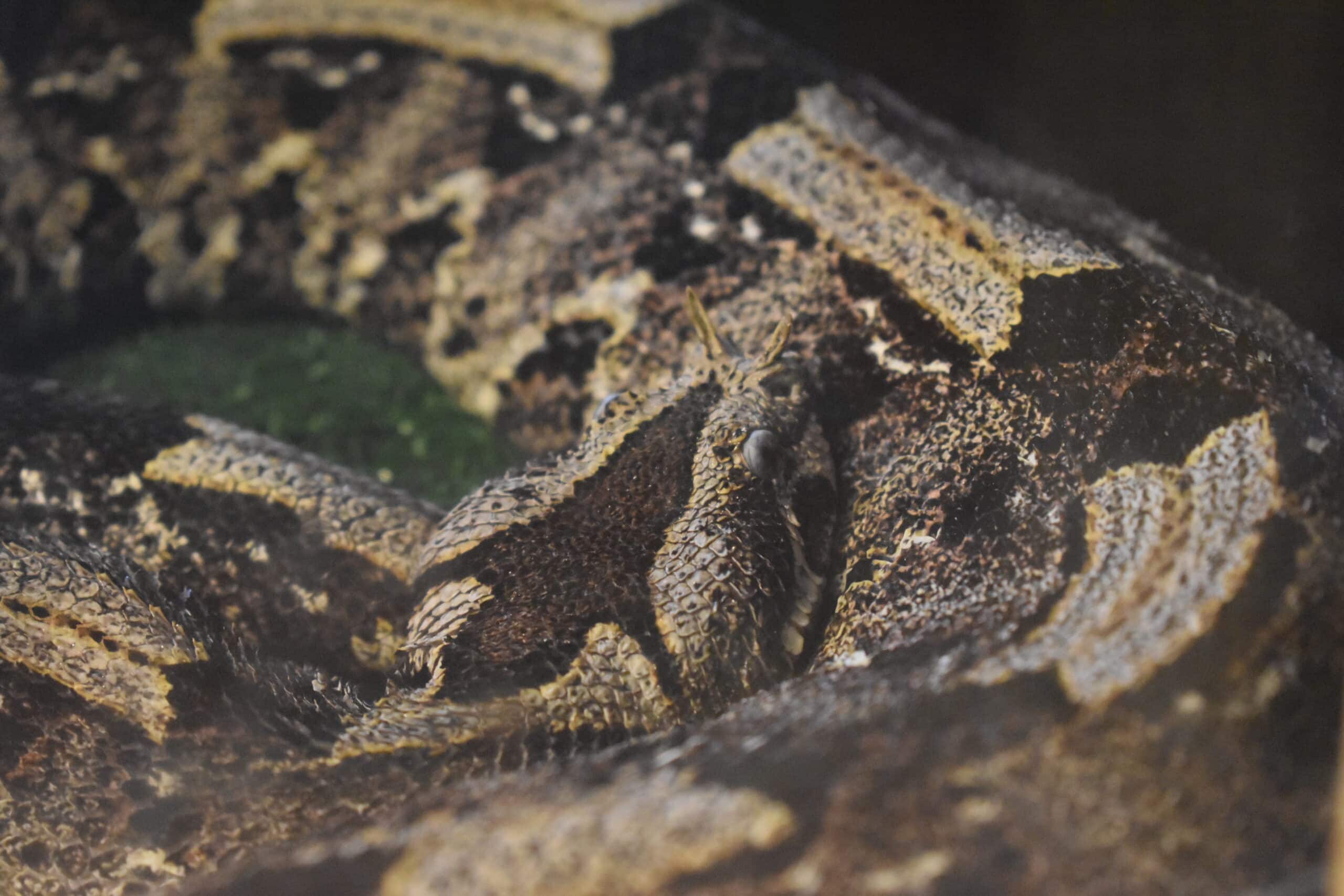
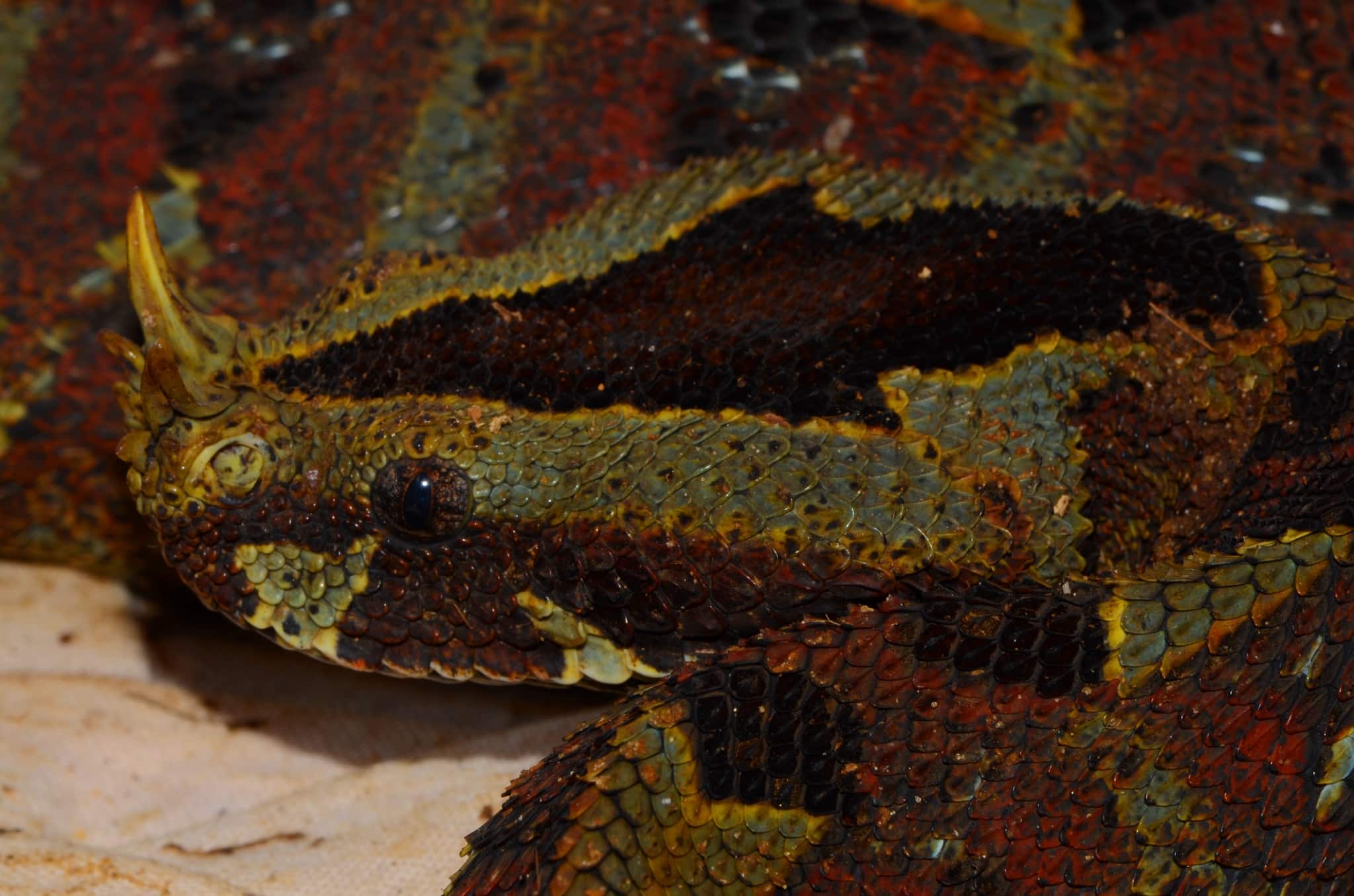
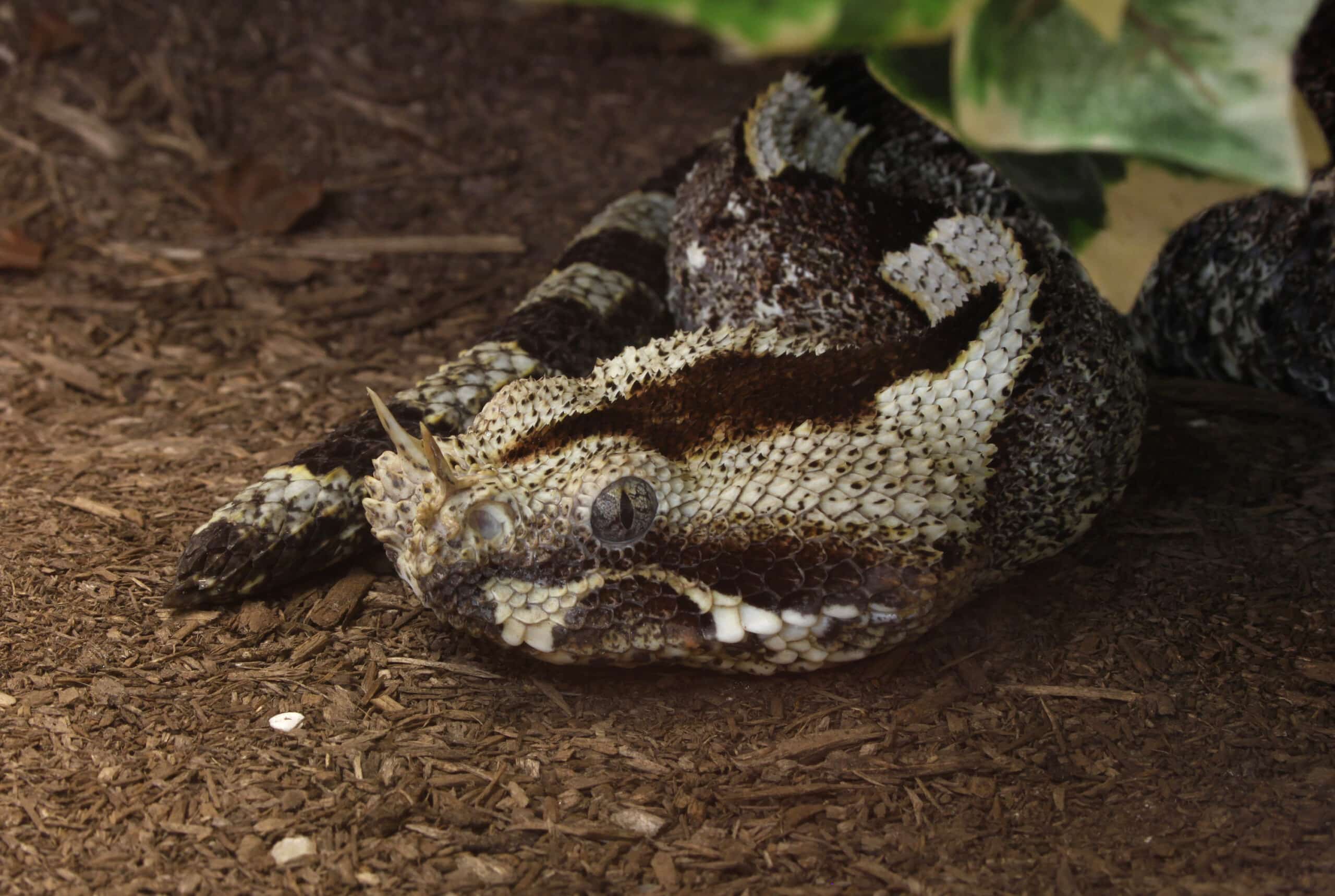
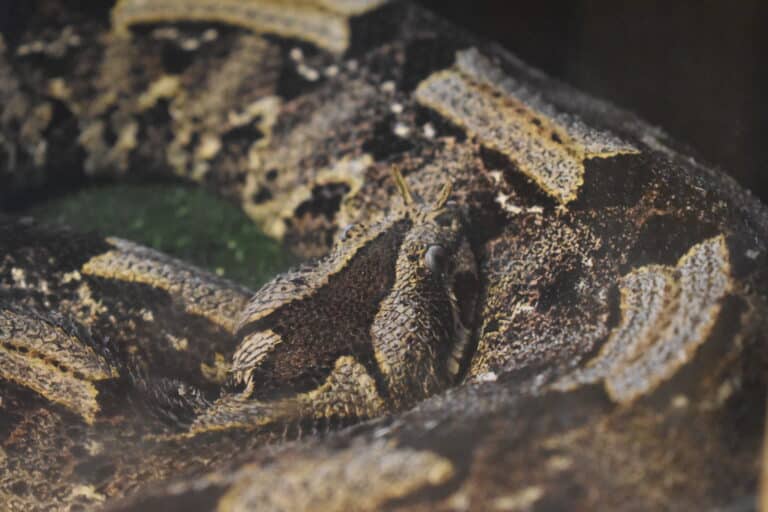
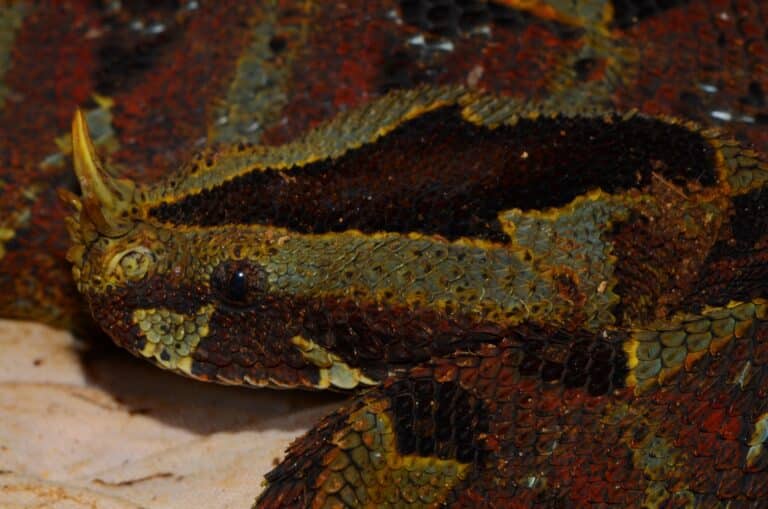
The Rhino Viper, also known as Bitis nasicornis, slithers around the jungles of Africa with a striking look. This reptile can grow to an impressive length of 2 to 3 feet (0.6 to 0.9 meters), making it a small but captivating creature!
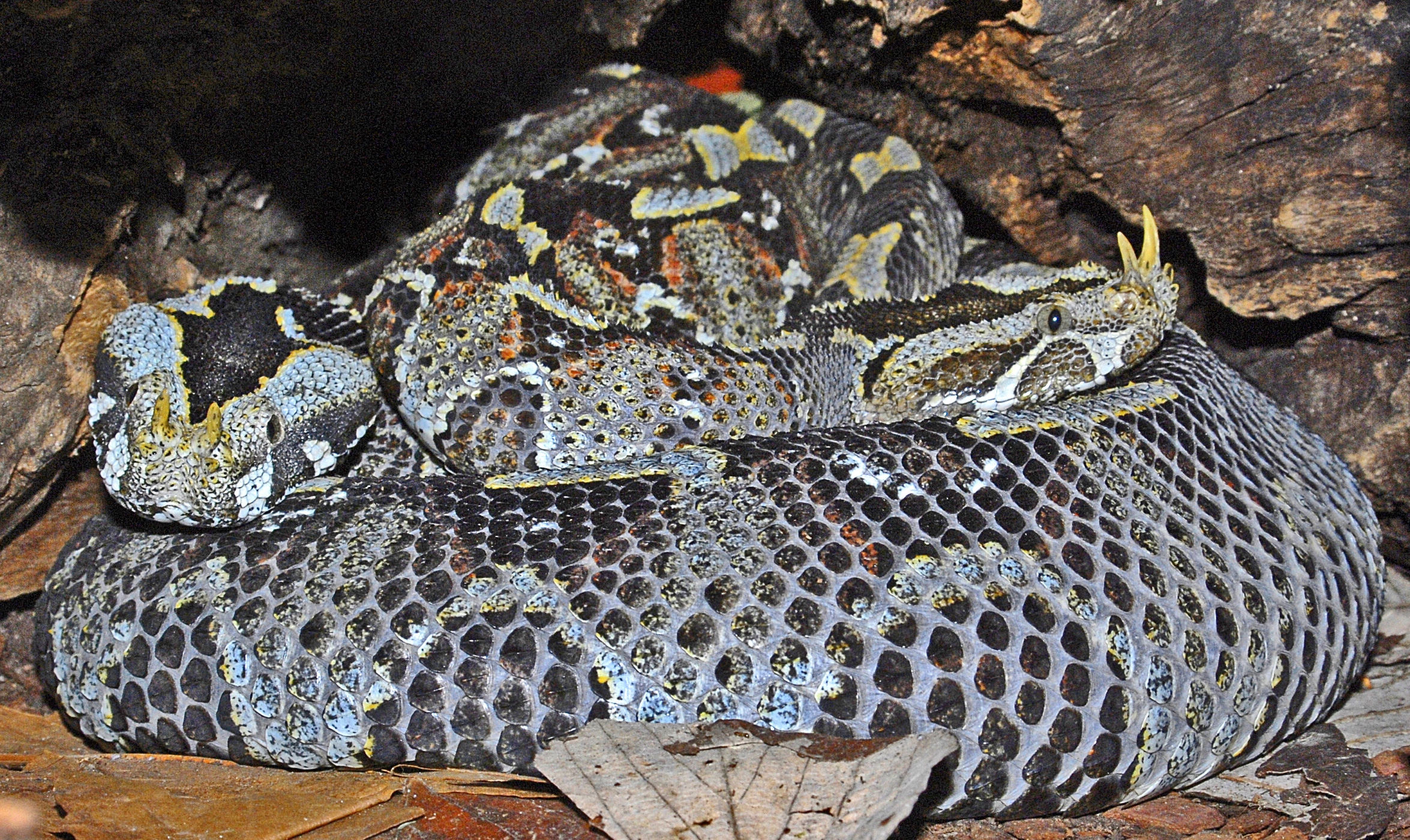
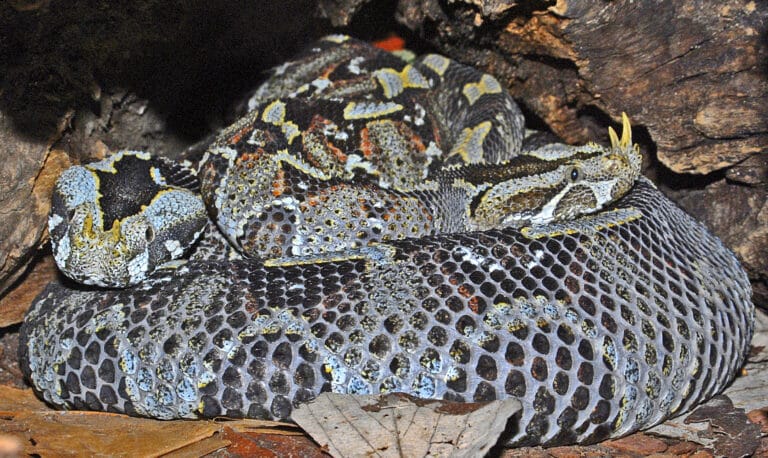
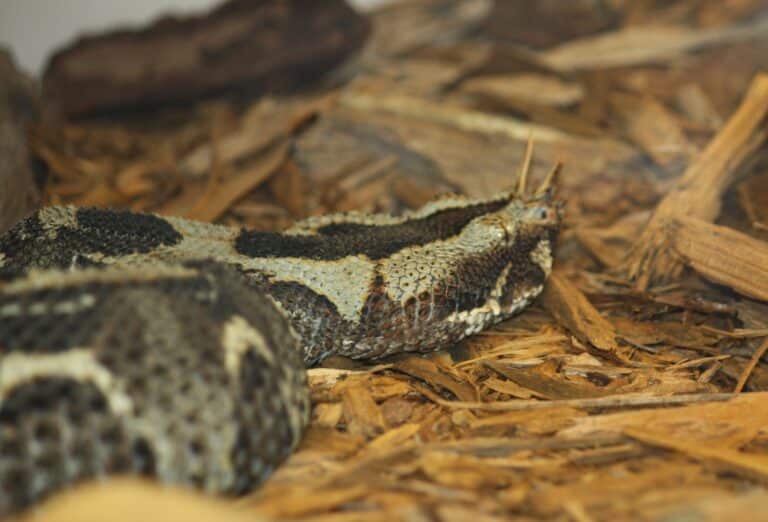
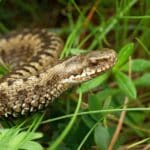
Rhino Vipers boast a unique appearance with their vibrant colors and horn-like scales on their noses. These fascinating features not only make them a sight to behold but also help them camouflage among the leafy surroundings.
This snake prefers a diet of rodents, birds, and frogs, showing its skillful hunting techniques. With a swift strike from its mighty fangs, the Rhino Viper can subdue its prey quickly, making dinner time both thrilling and effective!
Rhino Vipers live for about 10 to 12 years, giving them plenty of time to show off their beauty in the wilderness. These sneaky snakes often stay hidden during the day and come out at night to hunt, living life in the shadows.
Like other vipers, the Rhino Viper has special heat-sensing pits on its face. These pits help it find warm-blooded prey even in the dark, making it a cold-blooded hunter with hot skills!
Although many people fear snakes, the Rhino Viper is more interested in staying away from humans. With its amazing adaptation skills, this reptile plays an essential role in its ecosystem while keeping its cool.

Where can you find a Rhino Viper in the wild?
What does a Rhino Viper eat?
How big can a Rhino Viper grow?
How long does a Rhino Viper typically live?
What is the conservation status of the Rhino Viper?
What are the main threats to the Rhino Viper?
Fun facts
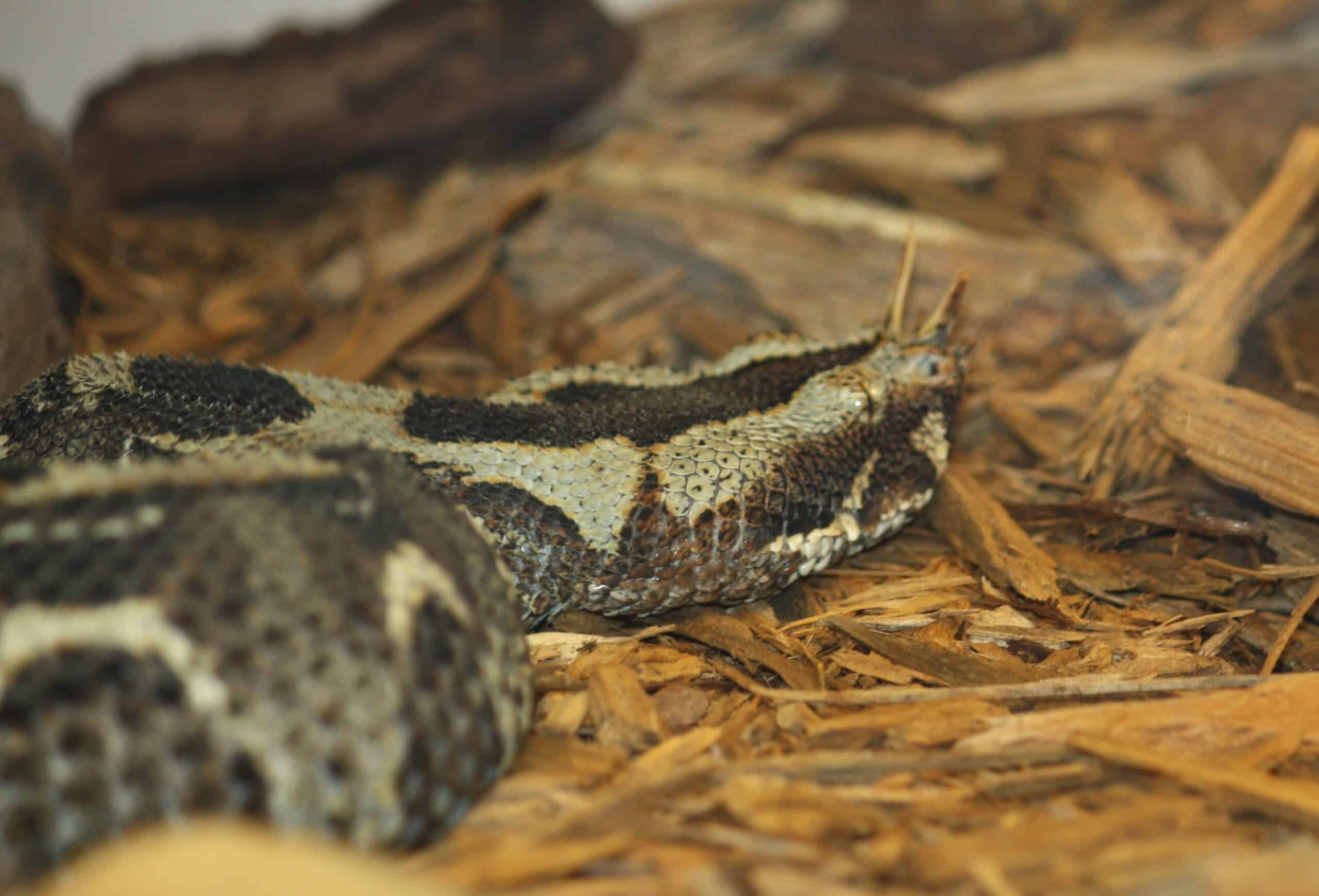
The Rhino Viper has a unique horn-like scale on its nose, which gives it a quirky, dragon-like appearance. This unusual feature might help it blend into the rainforest foliage and confuse potential predators.


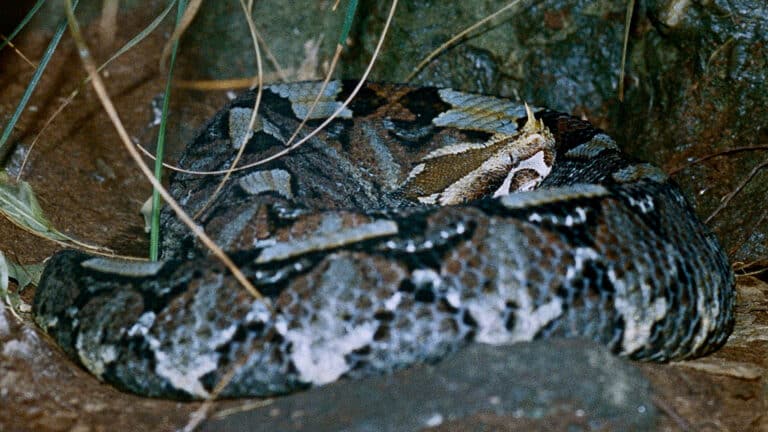
This vibrant snake can change its color slightly based on its surroundings. It might adjust its shades to become more camouflaged when hiding among leaves and shadows.
Rhino Vipers have special heat-sensing pits on their faces, allowing them to detect warmth from nearby animals, even in the dark. This helps them hunt for dinner like a superhero using a thermal vision gadget!
This snake prefers to hunt at night, which makes it a master of stealth. Under the cover of darkness, it quietly moves through the jungle, ready for action!
Rhino Vipers can strike their prey with lightning speed, reaching distances up to one-third of their body length. That's like jumping the length of a school bus in one quick move!
When threatened, these snakes can puff up their bodies to appear bigger, scaring off potential predators. It's their way of saying, 'You don’t want to mess with me!
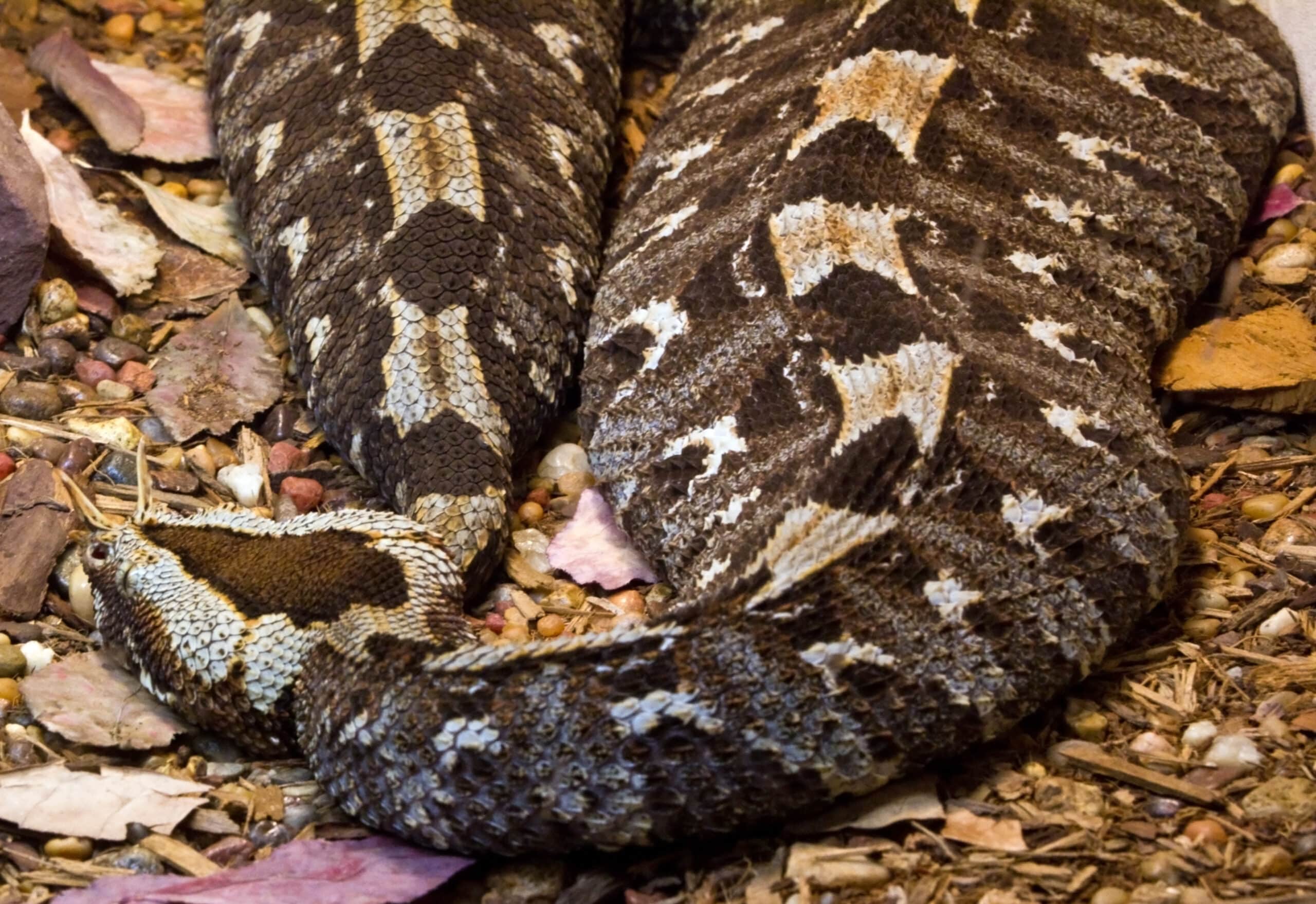
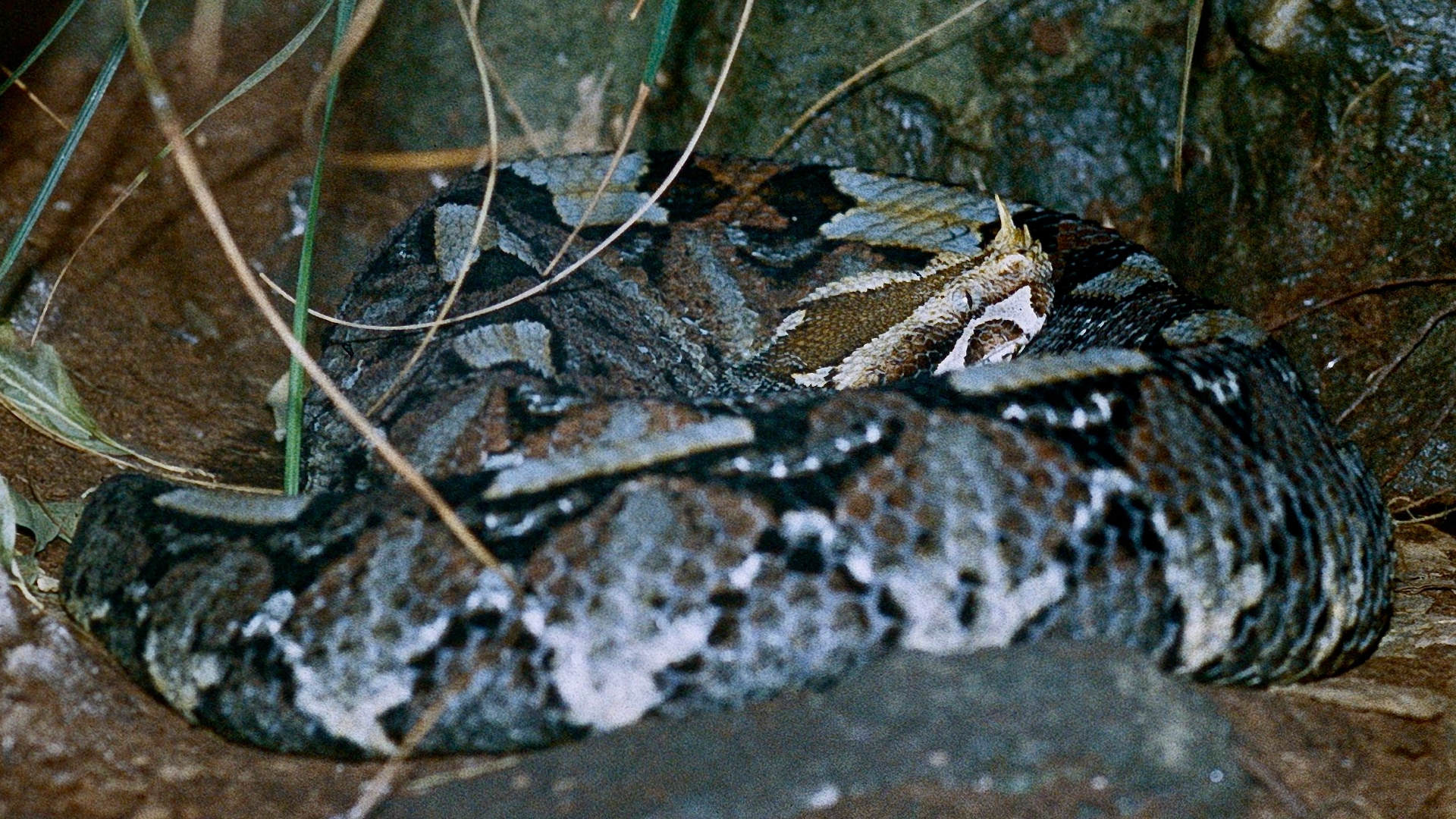
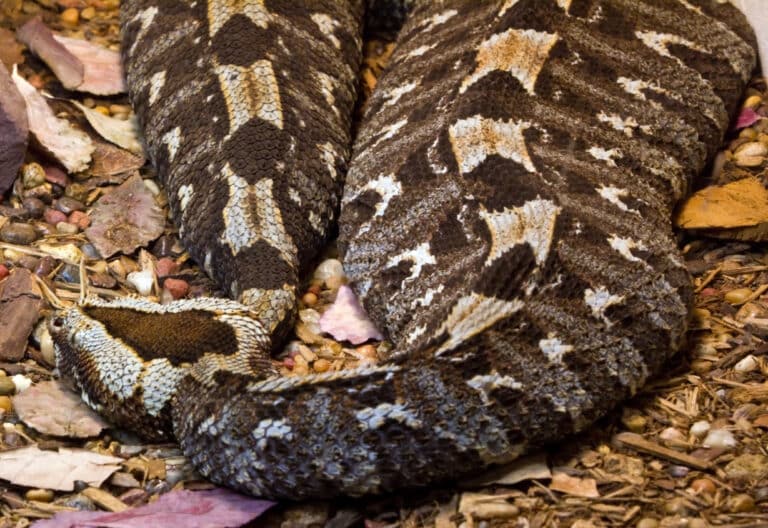
The Rhino Viper's striking pattern of colors and shapes is not just beautiful; it also helps it hide from both predators and prey. It's like wearing a natural work of art as camouflage!
When looking for a partner, Rhino Vipers perform a courtship dance involving body movements and gentle touches. This lively display is both a fun show and an essential part of their romantic lives!
These snakes live in social groups known as aggregations during the mating season. They will gather together, which makes their romantic rendezvous a lively gathering!
Even though Rhino Vipers have venomous fangs, they prefer to avoid humans. They rather blend in with the trees, showcasing their beauty without becoming the star of a scary story!
Photos


The Basics


explore more
Amphibians
Arachnids
Birds
Cats
Crustaceans
Fish
Fish Pet Guide
Gastropods
Insects
Invertebrates
Mammals
Pet Fish
Pet Rodents
Plants
Reptiles
Roundworms
Sea Slugs