

Successfully copied to clipboard!
Spiny bush viper
Unveil the secrets of vibrant spines in the forest!
Let’s Explore
Overview
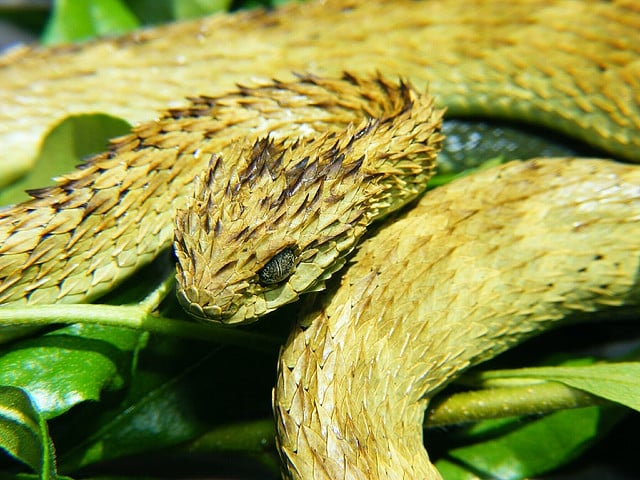
The spiny bush viper is a striking snake found in Africa. This scaly superstar grows between 45 to 60 centimeters (18 to 24 inches) long, making it a small but sensational reptile.
Sporting unique spines along its back, this viper surely knows how to make a fashion statement. These spines are not just for show; they help it blend into the leafy environment and keep it safe from hungry predators.
Spiny bush vipers eat a diet that includes birds, frogs, and small mammals. This snake waits patiently to ambush its prey, demonstrating the art of stealth in the wild.
With a lifespan of 10 to 12 years, the spiny bush viper has plenty of time to perfect its hunting skills. These vipers get their name from the spiny scales that might remind you of a prickly hedgehog!
Reptiles like the spiny bush viper belong to the class Reptilia and the order Squamata. This means they are cold-blooded, scaly, and absolutely incredible in their own right!
If you ever get a glimpse of a spiny bush viper in the wild, remember to admire from a distance. They play an important role in their ecosystems, helping to control the populations of their prey.

Where can you find a Spiny bush viper in the wild?
What does a Spiny bush viper eat?
How big can a Spiny bush viper grow?
How long does a Spiny bush viper typically live?
What is the conservation status of the Spiny bush viper?
What are the main threats to the Spiny bush viper?
Fun facts
The spiny bush viper has fantastic spines on its back that are perfect for camouflage. These spines help it blend in with the leaves, making it nearly invisible to both prey and predators.


This snake uses its incredible sense of smell to track down meals. It can detect the scent trails of birds and frogs, helping it locate dinner like a detective.
When spiny bush vipers hunt, they sometimes hang from branches to surprise their prey. They can look like a vine or a twig, making lunch come to them!
During mating season, male spiny bush vipers perform a dazzling dance to impress females. They sway and flick their tails to show off their skills and charm potential mates.
If threatened, a spiny bush viper can hiss loudly to scare off enemies. It uses its hiss like a warning sign, telling predators to back off.
The spiny bush viper can remain motionless for hours while waiting for prey. This remarkable patience makes it one of the stealthiest hunters in the rainforest.
These snakes are nocturnal, meaning they mostly hunt at night. They have fantastic night vision, which allows them to see well in the dark while most other animals are snoozing.
The spiny bush viper has a vibrant green color that helps it blend into the forest but can change slightly based on its surroundings. This ability makes it even harder for prey to spot!
A spiny bush viper does not need to drink water regularly. It gets hydration through the prey it consumes, just like a built-in water bottle!
In some cultures, people believe that seeing a spiny bush viper brings good luck. So, if you ever spot one, remember to make a wish!
Photos


The Basics


explore more
Amphibians
Arachnids
Birds
Cats
Crustaceans
Fish
Fish Pet Guide
Gastropods
Insects
Invertebrates
Mammals
Pet Fish
Pet Rodents
Plants
Reptiles
Roundworms
Sea Slugs
